


Cleaning and hygiene for care homes for the elderly and health and social care centres
Professional products organised by area: rooms and common areas, bathrooms, floors, kitchen and dining room, in-house laundry, hand hygiene and odour control. Each reference comes with its technical data sheet and its dose of use, so that the cleaning team works to clear criteria.
Call us: +34 938 891 344 · WhatsApp +34 610 77 61 25
Why cleaning a care home is different
A care home for the elderly or a health and social care centre brings together, in a single building, spaces with very different needs: rooms where people live, bathrooms in daily use, a communal dining room with its kitchen, a laundry that never stops and common areas with heavy footfall. What is more, cleaning is done with residents present and with staff who rotate between shifts.
In this context, the problem is rarely a lack of products, but rather too many references without clear criteria: unlabelled jerrycans, dilutions made "by eye", disinfectants applied to dirty surfaces or without respecting the contact time. The solution lies in a few well-chosen references for each area, doses taken from the technical data sheet and a written cleaning plan that all staff know.
Instaquim has manufactured professional cleaning products at its own plant in Vic (Barcelona) since 1990, with ISO 9001 and ISO 14001 certifications, 4 EU Ecolabel licences and a range of 320 products for 16 sectors. Here is the selection for care homes, organised by area. For a complete view of the sector, see also healthcare and geriatric care.
Which product goes with each area of the centre
Surface disinfection
High-touch surfaces
- InstaBact® DS — ready-to-use disinfectant cleaner
- InstaBact® 3000 — quaternary ammonium concentrate
- Bacter. — detergent, bactericidal/virucidal and deodorising
Kitchen and communal dining room
Surfaces, tableware and dishwashers
- Eco Gras — Ecolabel kitchen degreaser
- Eco Top — manual washing of tableware and glassware
- Deterdur — dishwasher detergent for water up to 40 ºHF
- Deterbrill — rinse aid for the final rinse
Hand hygiene and personal care
Staff and residents
- Dermo Foam — hand soap for foam dispensers
- Gerbac — rinse-free hand washing
- InstaBact® DM — antiseptic for healthy skin, AEMPS Reg. No.: 1294-DES
- Gel de baño piel sensible 0% — washing of sensitive and delicate skin
Featured products for care homes
InstaBact® DS is a ready-to-use liquid disinfectant cleaner that cleans and disinfects in a single operation; according to its data sheet, it complies with Standard UNE-EN 13697 under dirty conditions and with standard UNE-EN 14476 under dirty conditions for the organisms Adenovirus type 5 and murine Norovirus. For those who prefer concentrates, InstaBact® 3000 is a liquid bactericide and fungicide, with activity against enveloped viruses, based on quaternary ammonium, and Bacter. combines a triple detergent, bactericidal/virucidal and deodorising action. All three indicate environmental use and use in the food industry in their data sheets.





More references by family: professional disinfectants, professional floor cleaner, industrial dishwasher detergent and industrial laundry detergent.
Dose table by product
The doses in this table are taken from the technical data sheet of each product. Before using any reference, consult its technical data sheet and its safety data sheet.
| Product | Use | Dose as per data sheet | Technical data sheet |
|---|---|---|---|
| InstaBact® DS | Cleaning and disinfection of surfaces | Neat by spraying, immersion or cloth; leave to act for at least 5 min. Diluted in water at 5-10% for less critical surfaces, such as floors or wall tiles, in daily maintenance. | View sheet |
| InstaBact® 3000 | Disinfection of surfaces and equipment | Bactericidal: 2%, about 5 min. Bactericidal and fungicidal: 2%, about 15 min. Virucidal against enveloped viruses: 50%, about 5 min. Rinse with plenty of water. | View sheet |
| Bacter. | Cleaning and disinfection of surfaces | Bactericidal: 40 g/l (4%), about 5 min. Virucidal against enveloped viruses: 50 g/l (5%), about 15 min. Rinse with plenty of water. | View sheet |
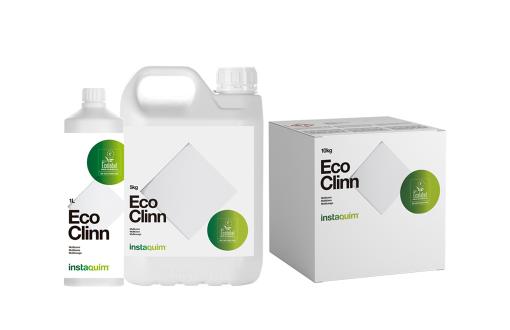
| Eco Clinn | Hard surfaces | Neat. Spray once from 20 cm from the surface and dry with paper or a cloth. No rinsing needed. | View sheet |
| Eco Glass | Glass | Neat. Apply and wipe with a cloth that leaves no residue. No rinsing needed. | View sheet |
| Eco Kal | Bathrooms: descaling | Neat. Leave to act for a few seconds and remove with a damp cloth. | View sheet |
| Eco WC | Toilets and sanitary ware | Neat on the encrusted areas; leave to act for a few minutes and rinse with water. | View sheet |
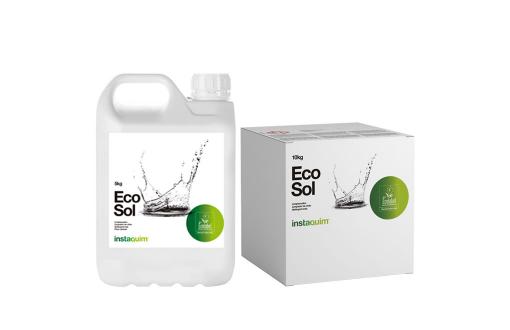
| Eco Sol | Floors (manual mopping) | 0.5% or 5 g/l (one capful for a 5 l bucket of water). | View sheet |
| Bio floor | Floors with biological soiling | Diluted in water at 1-2%, with a mop or cloth. No rinsing required. | View sheet |
| Eco Gras | Kitchen: degreasing | Neat. Spray from 20 cm, leave to act for a few seconds and remove with a damp cloth. | View sheet |
| Eco Top | Washing up by hand | Lightly soiled dishes: 4 g for 5 litres of water. Soiled dishes: 8 g for 5 litres of water. | View sheet |
| Deterdur | Automatic dishwasher | Between 1 and 5 g/l depending on water hardness, at 55-60 ºC. Do not use with aluminium utensils. | View sheet |
| Deterbrill | Rinse aid | Between 0.1 and 0.5 g/l, at 65-80 ºC. | View sheet |
| Gold | Laundry washing | Between 5 and 15 g per kg of dry linen, depending on soiling. Recommended temperature: about 40 ºC. | View sheet |
| Clormatic | Linen bleaching | From 5 to 15 g per kg of dry linen, for 5-8 minutes at 40-50 ºC. | View sheet |
| Suau | Softening | Between 5 and 10 g per kg of dry linen, in the final rinse. | View sheet |
| Gerbac | Rinse-free hand washing | Between 3 and 5 ml in the palm; rub for at least 30 seconds. | View sheet |
| InstaBact® DM | Antiseptic for healthy skin | 3 ml (one pump) on healthy, clean and dry skin; rub for at least 60 s or until it evaporates. Virucidal activity: 120 s. | View sheet |
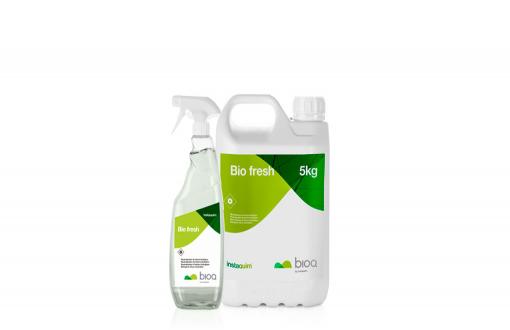
| Bio Fresh | Odours of organic origin | Neat or at 5-10%, diluted at the time of use. | View sheet |
| Bio clin | Organic stains on textiles and floors | Neat or diluted between 10 and 20 g/l depending on soiling. | View sheet |
How to organise the cleaning plan of a care home
A cleaning plan is a simple document that answers five questions for each area: what is cleaned, with which product and at what dose, how often, who does it and how it is checked. It should be on display in the cleaning room and handed to new staff on their first day.
1. Divide the centre into areas
Rooms, bathrooms, common areas, kitchen and dining room, laundry, cleaning room and storerooms. Each area has its typical soiling and its frequency. Within each area, identify the high-touch surfaces: door handles, handrails, push buttons, remote controls, grab bars, dining tables and armrests.
2. Clean first, then disinfect
Dirt protects microorganisms and reduces the action of the disinfectant. Remove the dirt first and, when the plan requires it, disinfect while respecting the dose and contact time on the technical data sheet. A disinfectant cleaner allows both to be done in a single operation when the data sheet says so.
3. From clean to dirty
In each room, start with the cleanest surfaces and finish with the bathroom and the floor. Use different cloths and buckets for bathrooms and for all other surfaces (a colour code makes this easy) and change them as often as the plan specifies.
4. Dose, don't guess
A dose below the data sheet may not give the expected result; a dose above it only increases consumption. Dispensers and sprayers labelled with the product name and the dilution prevent errors between shifts.
5. Kitchen and laundry, with their own protocol
The communal dining room follows its own self-monitoring system; see our HACCP guide for care homes and communal dining. In the laundry, keep dirty and clean linen separate throughout the circuit and follow the dose and temperature on each data sheet.
6. Record and review
A record sheet per area, signed per shift, lets you know what has been done and spot what is going wrong. Review the plan when the products or the use of the spaces change.
To apply step-by-step protocols, see the surface disinfection protocol with EN 14476 products, the hand hygiene protocol and the comparison of EN 14476 disinfectants.
Frequently asked questions about cleaning care homes
What is the difference between cleaning and disinfecting in a care home?
Cleaning removes visible dirt and organic matter; disinfecting reduces the microbial load of a surface. In general you clean first and disinfect afterwards, because dirt hinders the action of the disinfectant. Some products combine both functions: InstaBact® DS is a ready-to-use disinfectant cleaner that cleans and disinfects in a single operation, and Bacter. has a triple detergent, bactericidal/virucidal and deodorising action.
Which surface disinfectant should be used in rooms and common areas?
If you want a ready-to-use product, InstaBact® DS is applied neat by spraying, immersion or cloth and complies with UNE-EN 13697 and UNE-EN 14476 under dirty conditions according to its data sheet. If you prefer a concentrate, InstaBact® 3000 (quaternary ammonium) and Bacter. are diluted in water at the dose indicated in their technical data sheet. All three indicate environmental use and use in the food industry.
How long should the disinfectant be left to act?
As long as the technical data sheet of each product indicates. InstaBact® DS: leave to act for at least 5 min. InstaBact® 3000: for bactericidal effect, a 2% dose and about 5 min; for bactericidal and fungicidal effect, a 2% dose and about 15 min. Bacter.: for bactericidal effect, 40 g/l (4%) and about 5 min; for virucidal effect against enveloped viruses, 50 g/l (5%) and about 15 min. InstaBact® 3000 and Bacter. are rinsed off with plenty of water.
Which shower gel should be used with residents with sensitive skin?
Gel de baño piel sensible 0% is specially formulated for elderly people with bedsores or pressure ulcers, according to its data sheet, and is also indicated for sensitive and delicate skin. It contains no parabens, colourants or perfumes and is used neat.
What products are there for staff hand hygiene?
For hand washing, Dermo Foam is a liquid hand soap for foam dispensers. For rinse-free washing, Gerbac: add between 3 and 5 ml to the palm and rub for at least 30 seconds. InstaBact® DM is an antiseptic for healthy skin (AEMPS Reg. No.: 1294-DES): 3 ml is applied to healthy, clean and dry skin and rubbed for at least 60 s or until it evaporates; for virucidal activity, leave to act for 120 s.
How should linen be treated in the centre's in-house laundry?
Gold is an enzymatic liquid detergent for all types of linen, at a dose of between 5 and 15 g per kg of dry linen and a recommended temperature of about 40 ºC. Clormatic is a bleach based on stabilised active chlorine which, according to its data sheet, can be used together with the detergent or in a separate bleaching step for hospital linen, at 5-15 g per kg of dry linen for 5-8 minutes at 40-50 ºC. Suau is the softener for the final rinse.
How can odours from urine or organic matter be eliminated?
Bio Fresh, based on enzymes and surfactants, is indicated where odours come from the accumulation and breakdown of organic matter, grease, proteins or urine; it is used neat or at a dose of 5-10%. Bio clin is a biological cleaner for carpets, upholstery, textiles and floors with organic or bodily fluid stains, neat or diluted between 10 and 20 g/l.
Do you have EU Ecolabel products for care homes?
Yes. Eco Clinn (multipurpose), Eco Glass (glass cleaner), Eco Kal (bathroom descaler), Eco WC (toilets and sanitary ware), Eco Sol (floors) and Eco Gras (kitchen degreaser) hold EU Ecolabel certificate no. ES-CAT/020/026, and the manual dishwashing detergent Eco Top, no. ES-CAT/019/014. Instaquim holds 4 EU Ecolabel licences; more information on the EU Ecolabel page.
Shall we organise the range for your centre?
Tell us what type of centre you manage (care home, day centre, health and social care centre), how many places it has and whether it has its own kitchen and laundry: we will propose the references by area, with their technical data sheet and their dose of use.
Request advice
All fields are required except the message.
Prefer to talk to us directly? +34 938 891 344
You may also be interested in
Instaquim is a manufacturer based in Vic (Barcelona) with its own plant since 1990, present in 13 countries and with more than 40 active distributors.