




Circular Economy in Chemical Packaging
Circular economy in chemical packaging refers to the systematic approach of designing, producing, and managing chemical product containers throughout their entire lifecycle to minimize waste, reduce resource consumption, and maximize material recovery and reuse. This model contrasts with the traditional linear "take-make-dispose" approach by implementing closed-loop systems where packaging materials are continuously recycled, refurbished, or repurposed, thereby reducing environmental impact while maintaining compliance with safety and regulatory standards established by REACH, ISO 14001, and EU Ecolabel certification requirements.
The practical implementation of circular economy principles in industrial chemical packaging involves several interconnected strategies. Manufacturers must consider material selection—prioritizing recyclable polymers such as HDPE and PP, or aluminum—alongside design optimization to reduce weight and material volume without compromising product protection.
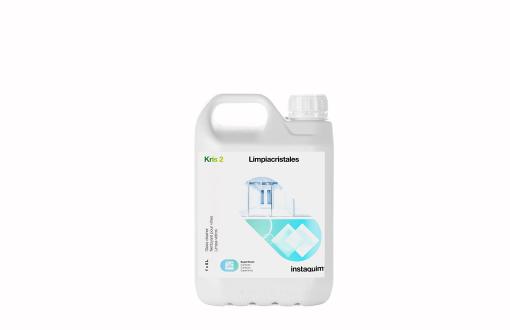
In the food processing sector, chemical suppliers increasingly adopt returnable container systems for concentrated detergents and sanitizers. Industrial laundries utilize refillable jerry cans for specialized cleaning agents, reducing packaging waste while maintaining product integrity and traceability. Pharmaceutical and cosmetic manufacturers employ mono-material containers that facilitate polymer identification and sorting, enhancing recyclability rates. In manufacturing facilities, bulk chemical handling systems with IBC (Intermediate Bulk Container) remanufacturing programs represent a mature circular model where containers are inspected, cleaned, and recertified for repeated cycles, extending the service life of the containers.
Regulatory frameworks increasingly mandate circular economy integration. The EU Ecolabel scheme, which Instaquim holds for multiple formulations, includes requirements on packaging. REACH compliance ensures that recycled materials maintain substance safety standards throughout circulation cycles. ISO 14001 environmental management systems provide the framework for tracking packaging flows, measuring circular performance metrics, and identifying optimization opportunities across distribution networks.
Advanced logistics and digital tracking technologies enable real-time visibility of packaging circuits, supporting material accountability and circular performance measurement. Supply chain partnerships between chemical manufacturers, packaging producers, and waste management operators create functioning recovery ecosystems where contamination is minimized and material quality preserved through standardized protocols and handling procedures.
← Back to glossary